Rick Aschman composed a map from the data provided in the Atlas of North American English (ANEA), which most if not all of the English dialects as well as some commonly spoken native languages North of Mexico. In this map there are 8 broader dialectical families with some variation withing most of them. His map appears below. The link to his main page is here, if you want to take a closer look. I highly recommend that you do.
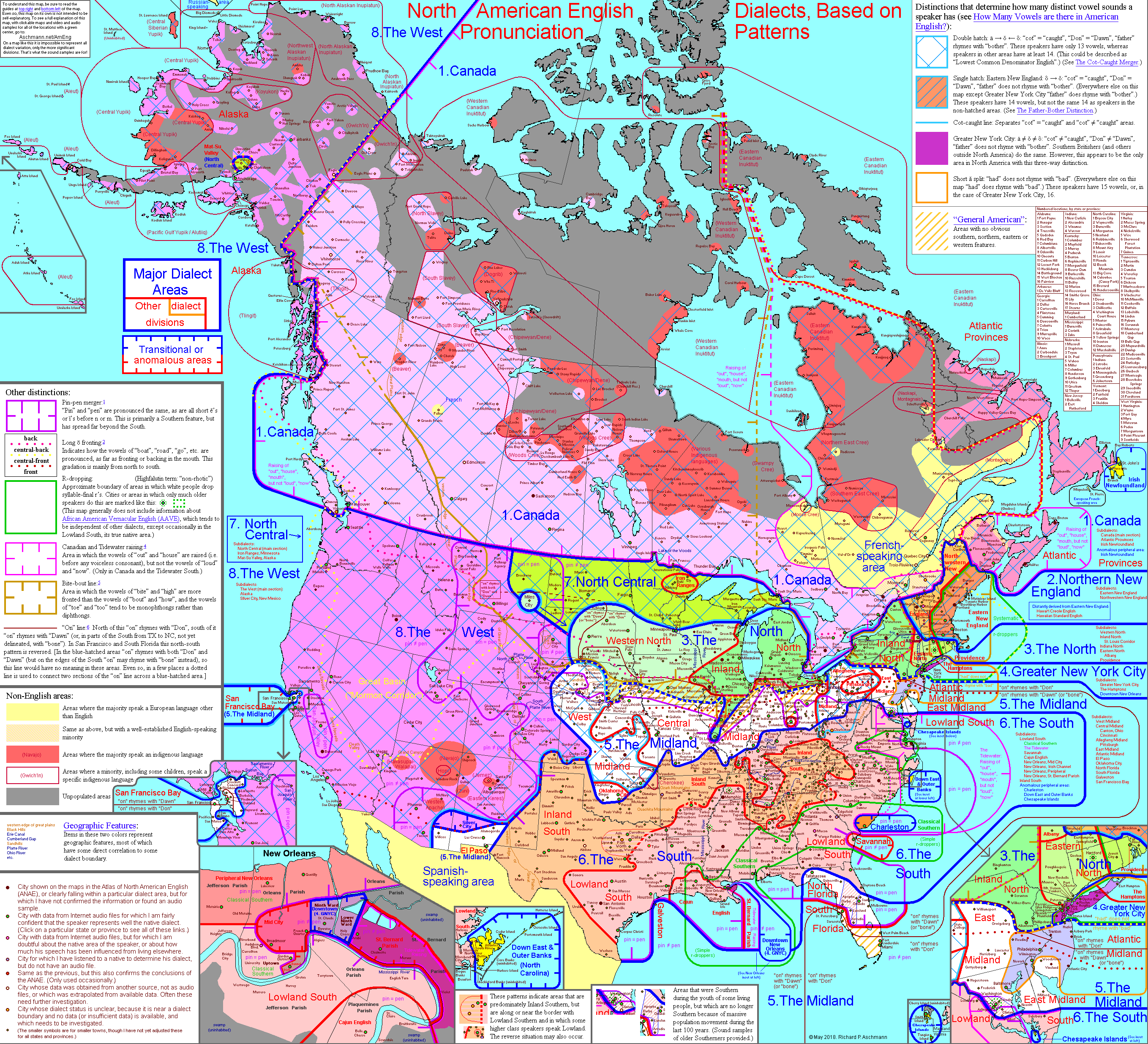
I have absolutely no ability to say how accurate this is but if you followed the link you may be able to hear some of the audio files they have in support of this mapping. This is the work of many people over years, maybe decades and I would have to study it for longer than I have been alive to feel comfortable in opining on its validity. It does make me want to look into it further but it does overwhelm a bit.
From the time I moved to the US as a child and realized even the people in my extended families did not speak in the same fashion I was curious as could be. My family in Vermont sounded different from that which lived in Chicago and those from Texas did not sound the same as the ones living in North Carolina. Though we all spoke the same language, there were so many shifts in common speaking patterns I would catch myself imitating them after a little time spent listening to them. Each summer after visiting with my Texan cousins I would continue using Ya'll for about a month.
I wasn't the only one curious about this. When I lived in Turkey I was asked by several people what my American accent was. The most commonly recognized and imitated the world over is the Southern Accent. I was never able to share what my accent was knowing only that it was American. Now, barring accent shifting from imitating my surroundings, I can say that I have a Western American Accent. Fancy that!
~Sarah


